Calanque de l’Huile
An L-shaped rocky inlet on the north-west coast of Pomègues, 25 minutes from the port of Frioul, sheltered even in strong winds.
Contents · 7 sections
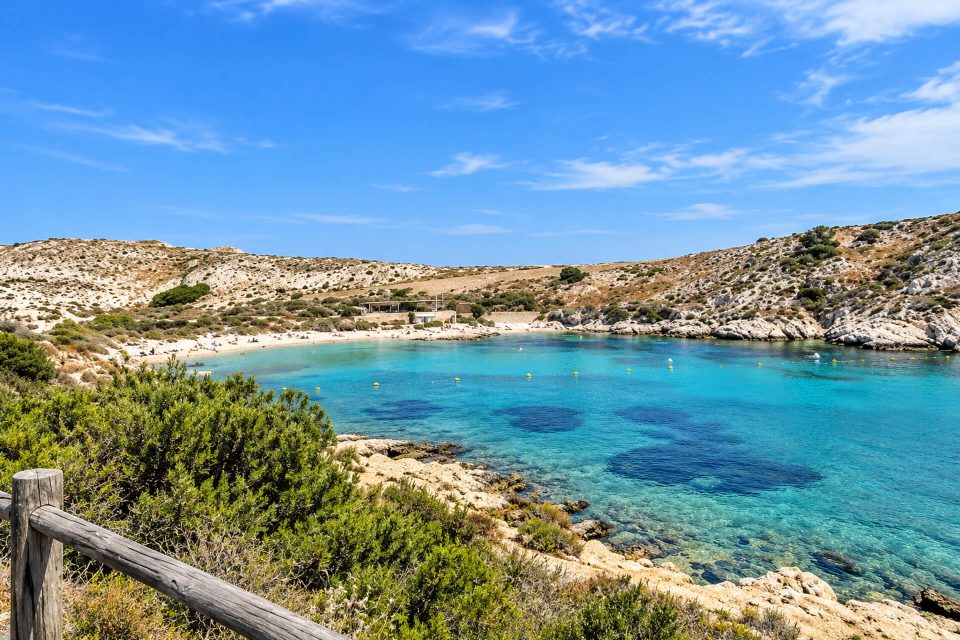
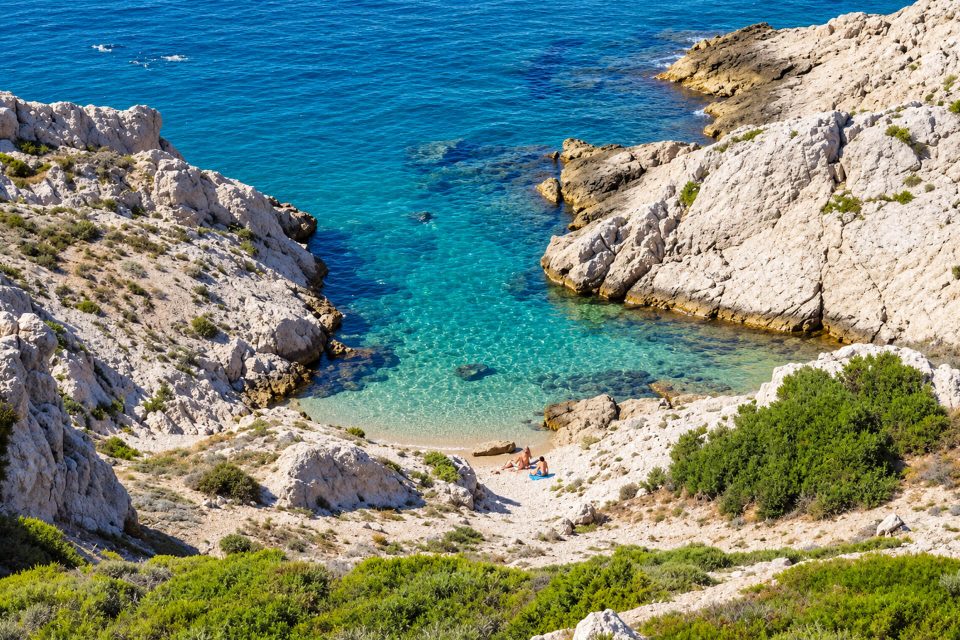
The Calanque de l’Huile cuts into the north-west coast of the island of Pomègues, level with the Tour du Pomèguet. It lies almost opposite the port of Pomègues, where the island is at its narrowest. There is no beach here, only rocks: it is an inlet for confident swimmers, and a stop on the hike that leads to the end of the island.
Why go
- A name that speaks to sailors: according to the Tourist Office, it comes from the expression “mer d’huile” (a sea like oil), a perfectly calm sea.
- A shelter: the calanque is known for protecting boats, even on windy days.
- An easy stop on the Pomègues hike, halfway between the Digue Berry and the semaphore.
The calanque
The calanque is L-shaped. You settle on fairly steep rocks: there is no sand or gravel, and shoes make getting into the water easier. From the inlet, you can see the semaphore on the left. As elsewhere on Pomègues, there is no shade, no water point and no lifeguard. On the archipelago, only Saint-Estève Beach, on Ratonneau, has a first-aid post in summer.
The National Park points out that the water in the calanques is often cold and that the currents are sometimes unpredictable. Only swim from the rocks when the sea is calm.
Getting there
- By boat: Le Bateau Frioul If shuttle, operated by RTM, from the ferry terminal on the quai de la Fraternité, on the Vieux-Port. Departures every day depending on the weather; a crossing of 20 to 35 minutes depending on whether or not it stops at the Château d’If. Full-price return: €17.70 (fare as of 1 November 2026).
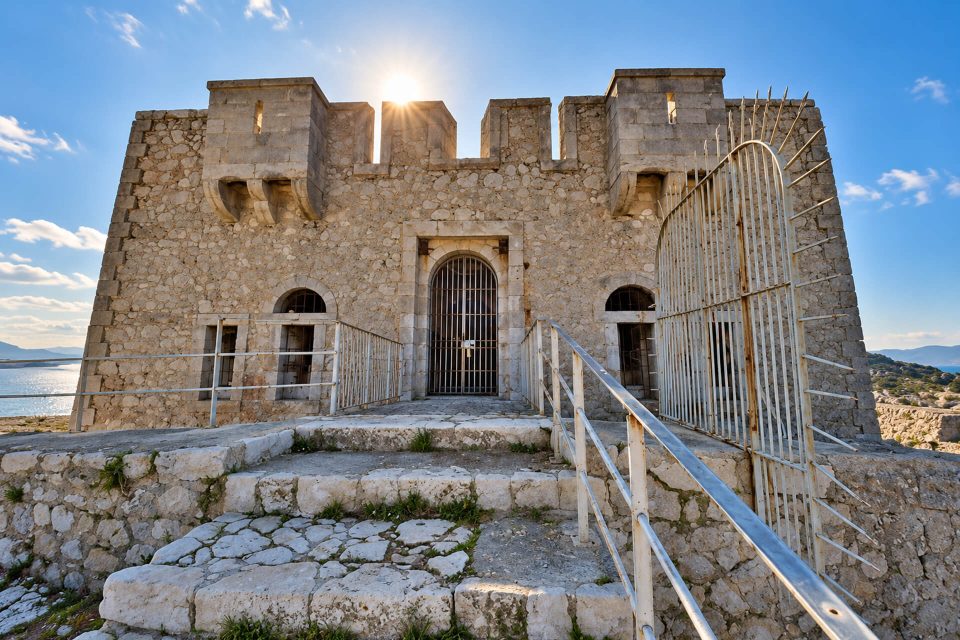
- On foot: from the port of Frioul, cross the Digue Berry and follow the Pomègues track to the Tour du Pomèguet. A little further on, a path goes off to the right towards the calanque, marked by a small yellow sign. Allow about 1.6 km and 25 minutes, with no significant climb.
Good to know
- Marked paths only: the City of Marseille (order of 5 February 2021) and the National Park prohibit walking off the paths on Pomègues and Ratonneau, to protect the plants and nesting birds.
- Gulls: from March to July, they nest on the ground, often beside the paths. Keep your distance from the nests.
- Dogs must be kept on a lead throughout the archipelago. Remember water for them: the heat quickly tires them on this treeless island.
- Water and sun: no drinking fountain on Pomègues. The Park recommends at least 1.5 litres of water per person per half-day.
- Rubbish: the Park points out that there are no bins in the calanques; take everything back with you.
Nearby
The Calanque de l’Huile is part of a string of small inlets on the north-west coast: to the south-west, the Calanque de l’Escondelle then the Calanque de Flancadou, and further on the Calanque de la Crine, the only one in this area with small beaches. On the other side of the island, a few minutes away, the port of Pomègues holds the former quarantine harbour and a fish farm. Further south, the path leads to the semaphore and the Cap Caveaux battery.
Sources : Marseille Tourist Office - Calanques National Park - Le Bateau Frioul If (RTM) - Wikipedia, Pomègues - OpenStreetMap - Plages TV guide
Nearby
 Calanque de l’Escondelle≈ 5 min on foot
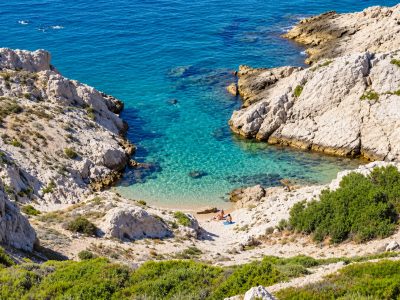 Calanque de Flancadou≈ 5 min on foot
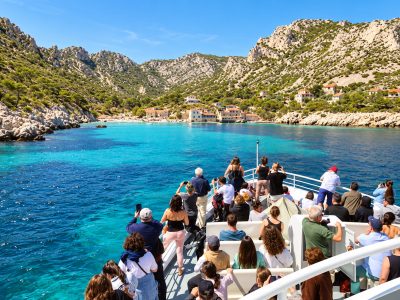 Calanque du Port de Pomègues≈ 5 min on foot
Times calculated from each guide’s coordinates.
Frequently asked questions
Where is the Calanque de l’Huile?
On the north-west coast of the island of Pomègues, on the Frioul, level with the Tour du Pomèguet and almost opposite the port of Pomègues.
Is there a beach at the Calanque de l’Huile?
No, only fairly steep rocks. Water shoes make swimming easier.
How long does it take to walk there?
About 25 minutes from the port of Frioul, via the Digue Berry and the Pomègues track, then a signposted path on the right after the tower.
Where does the name Calanque de l’Huile come from?
From the sailors’ expression “mer d’huile”, a very calm sea, according to the Marseille Tourist Office.
Is swimming supervised?
No. On the Frioul archipelago, only Saint-Estève Beach has a first-aid post in summer.