Calanque de Flancadou
A heart-shaped calanque on the west coast of Pomègues: three tiny beaches, 30 minutes on foot from the Frioul harbour.


Contents · 7 sections
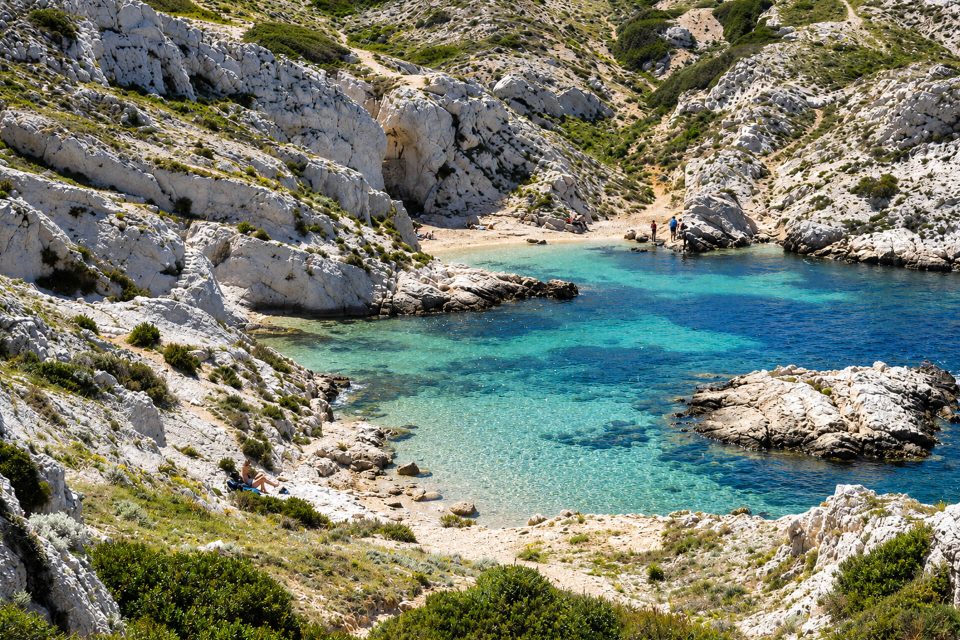
The Calanque de Flancadou opens onto the west coast of Pomègues, in the southern half of the island, between the Calanque de l’Escondelle and the Calanque de la Crine. Its shape is reminiscent of a heart, and it hides three tiny beaches. It is a stop on the Sentier des Astragales, half an hour from the Frioul harbour, for those who want a quieter inlet than neighbouring La Crine.
Why go
- Three small beaches in a single calanque, which is still rare on islands that are mostly rocky.
- On the way to La Crine: the same waymarked path serves both calanques, a few minutes from each other.
- Early in the morning, beach guides note that you can have it almost to yourself.
The calanque
Two access points, about a hundred metres apart, lead down to the water. The first ends at a rock beach, the least pleasant of the three. The second leads to two very narrow beaches: one of fine gravel, the other with a little sand. Guides rank it among the difficult access points: bring sturdy shoes for the way down.
There are no facilities, no shade and no lifeguards. In the archipelago, only Saint-Estève beach, on Ratonneau, has a lifeguard station in summer. The National Park points out that the water in the calanques is often cold and that it is best to swim from the rocks only when the sea is calm.
Getting there
- By boat: the Le Bateau Frioul If shuttle, run by RTM, leaves from the ferry terminal on Quai de la Fraternité (Vieux-Port) every day, weather permitting. Allow 20 to 35 minutes for the crossing, depending on whether it stops at the Château d’If. Full-price return: €17.70 (fare as of 1st November 2026).
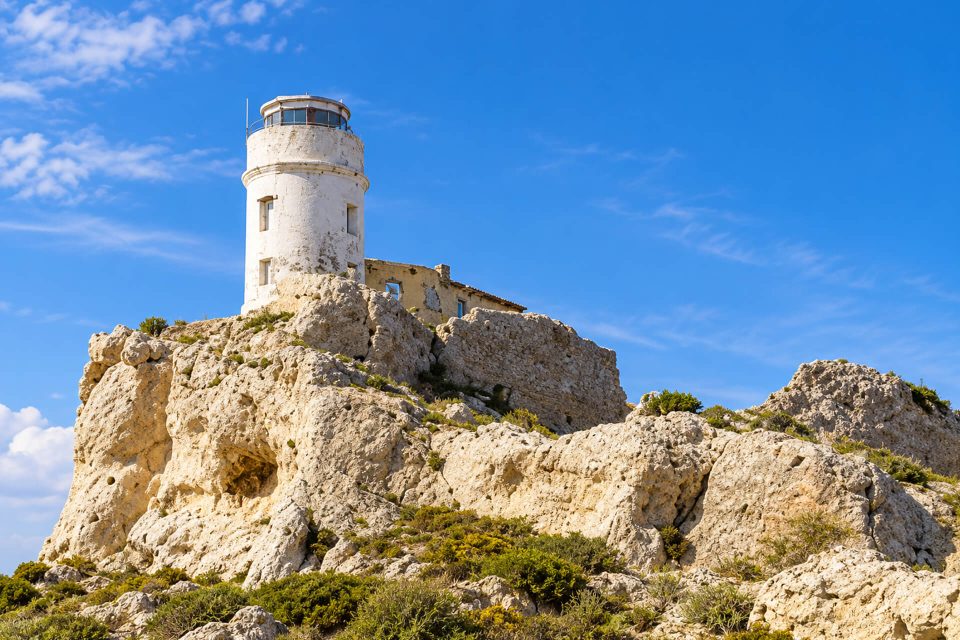
- On foot: from the Frioul harbour, cross the Digue Berry and follow the Pomègues track to the Pomèguet tower. Carry on, then turn right onto the waymarked Sentier des Astragales. About 1.9 km and half an hour’s walk, on easy ground until the last steps down to the water.
Good to know
- Off-path walking forbidden: on Pomègues and Ratonneau, the municipal order of 5 February 2021 and the National Park regulations forbid walking off the waymarked paths. Only go down to the sea by the designated access points.
- Fragile flora: the sea daffodil, a rare and protected species, grows in the archipelago. No picking or trampling of plants.
- Gulls: from March to July, they nest on the ground near the paths and sometimes attack anyone who comes close to their nests.
- Dogs on a lead throughout the archipelago.
- Water: there is no fountain on Pomègues; the Park recommends at least 1.5 litres per person per half-day.
Nearby
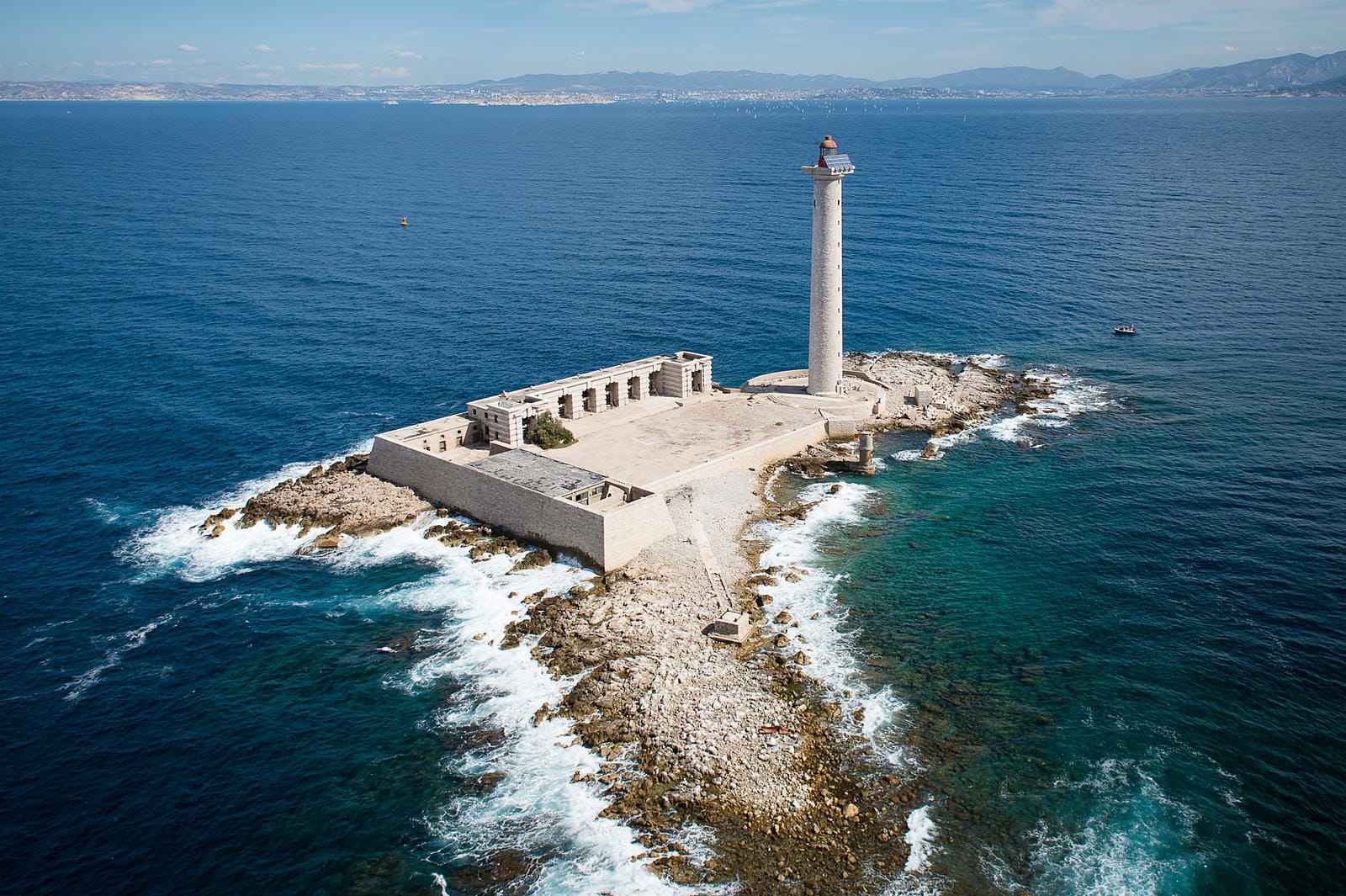
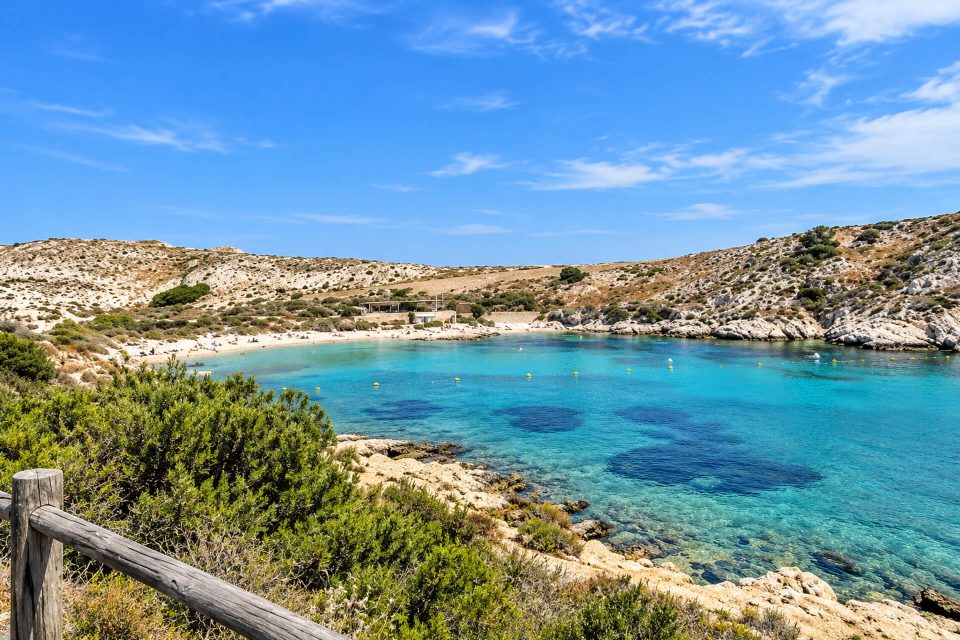
To the south-west, a few minutes further on, the Calanque de la Crine, known as Tahiti beach, is the Pomègues inlet most often mentioned by guides. To the north-east, the Calanque de l’Escondelle and the Calanque de l’Huile have nothing but rocks. On the other side of the island, the Port de Pomègues still bears traces of the old quarantine harbour. Further south, the path leads to the semaphore and then to the Cap Caveaux battery.
Sources : Calanques National Park - Marseille Tourist Office - Le Bateau Frioul If (RTM) - OpenStreetMap - Plages TV guide - Bord de mer directory
Nearby
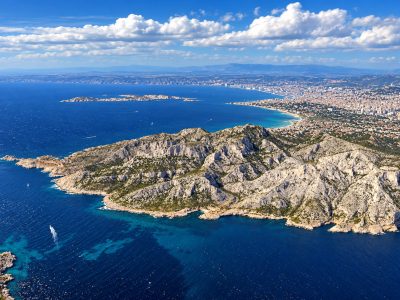 Calanque de l’Escondelle≈ 5 min on foot
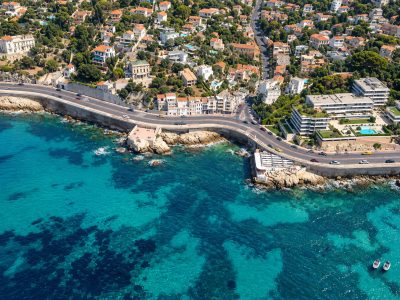 Calanque de l’Huile≈ 5 min on foot
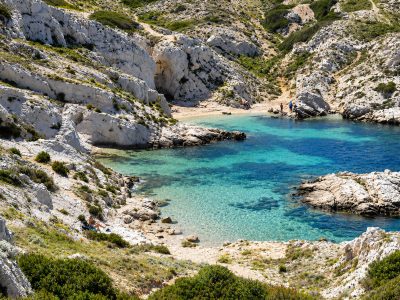 Calanque de la Crine≈ 5 min on foot
Times calculated from each guide’s coordinates.
Frequently asked questions
Where is the Calanque de Flancadou?
On the west coast of Pomègues island, in the Frioul, between the Calanque de l’Escondelle and the Calanque de la Crine.
How do I get to the Calanque de Flancadou?
Shuttle from the Vieux-Port to the Frioul harbour, then about 30 minutes on foot via the Digue Berry, the Pomègues track and the Sentier des Astragales.
Is there a beach at Flancadou?
Three very small beaches: one of rock, one of fine gravel and one with a little sand.
Are there lifeguards?
No. In the Frioul, only Saint-Estève beach has a lifeguard station in summer.
Can I bring a dog?
Yes, on a lead, as throughout the Frioul archipelago.