Calanque de Sormiou
The widest of Marseille’s calanques: sand and pebble beach with lifeguards in summer, hamlet of cabanons, access on foot in season.
Contents · 8 sections
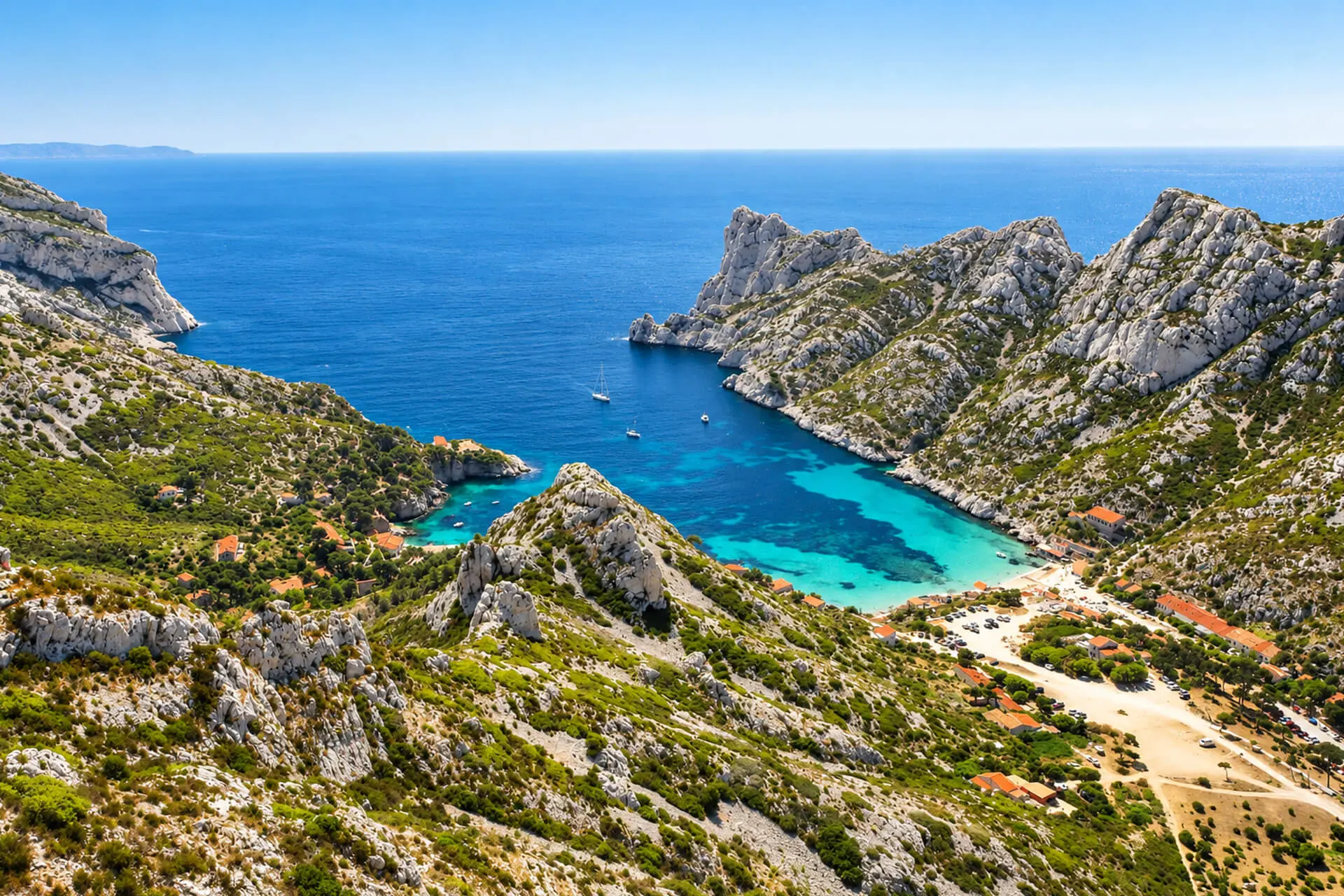
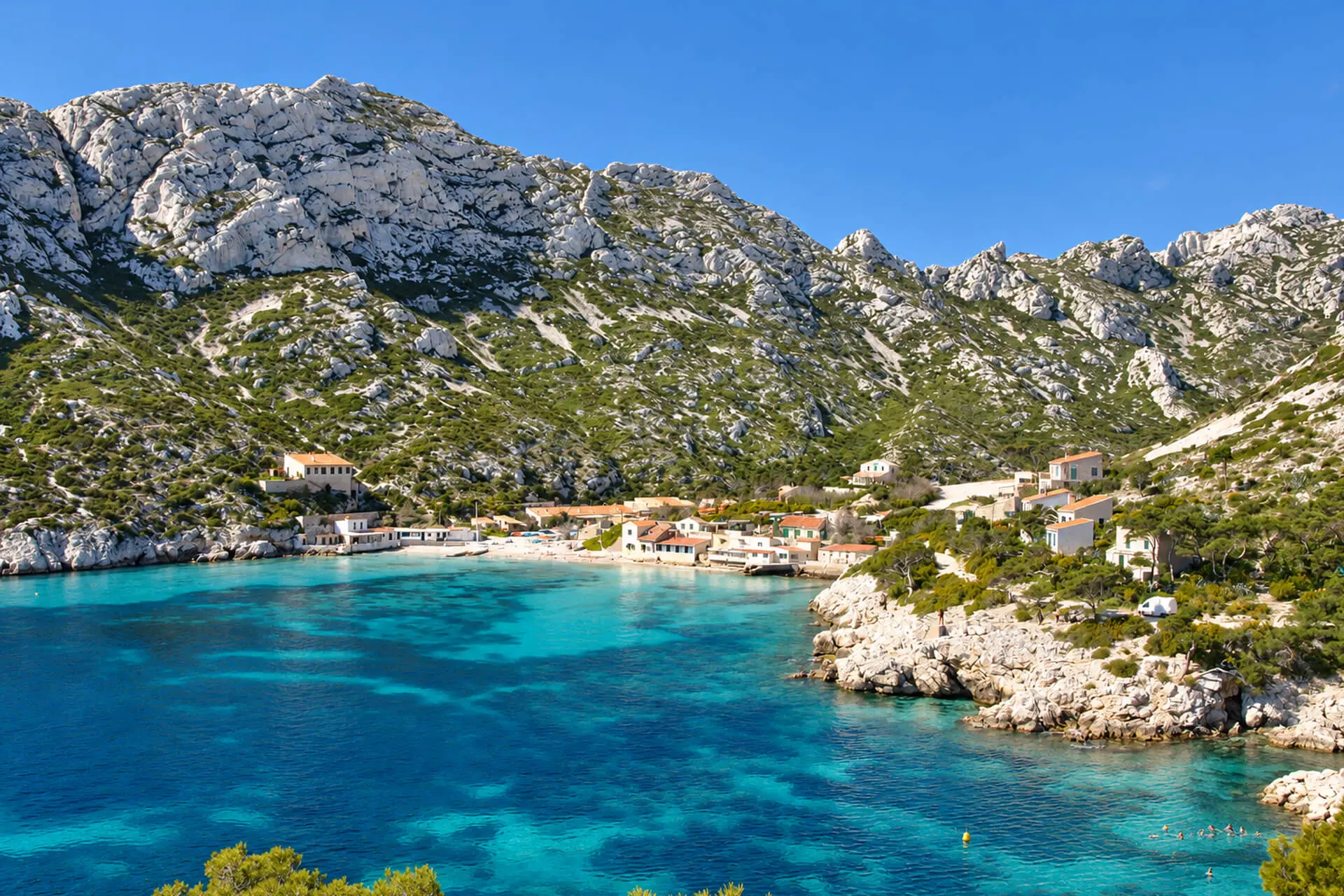
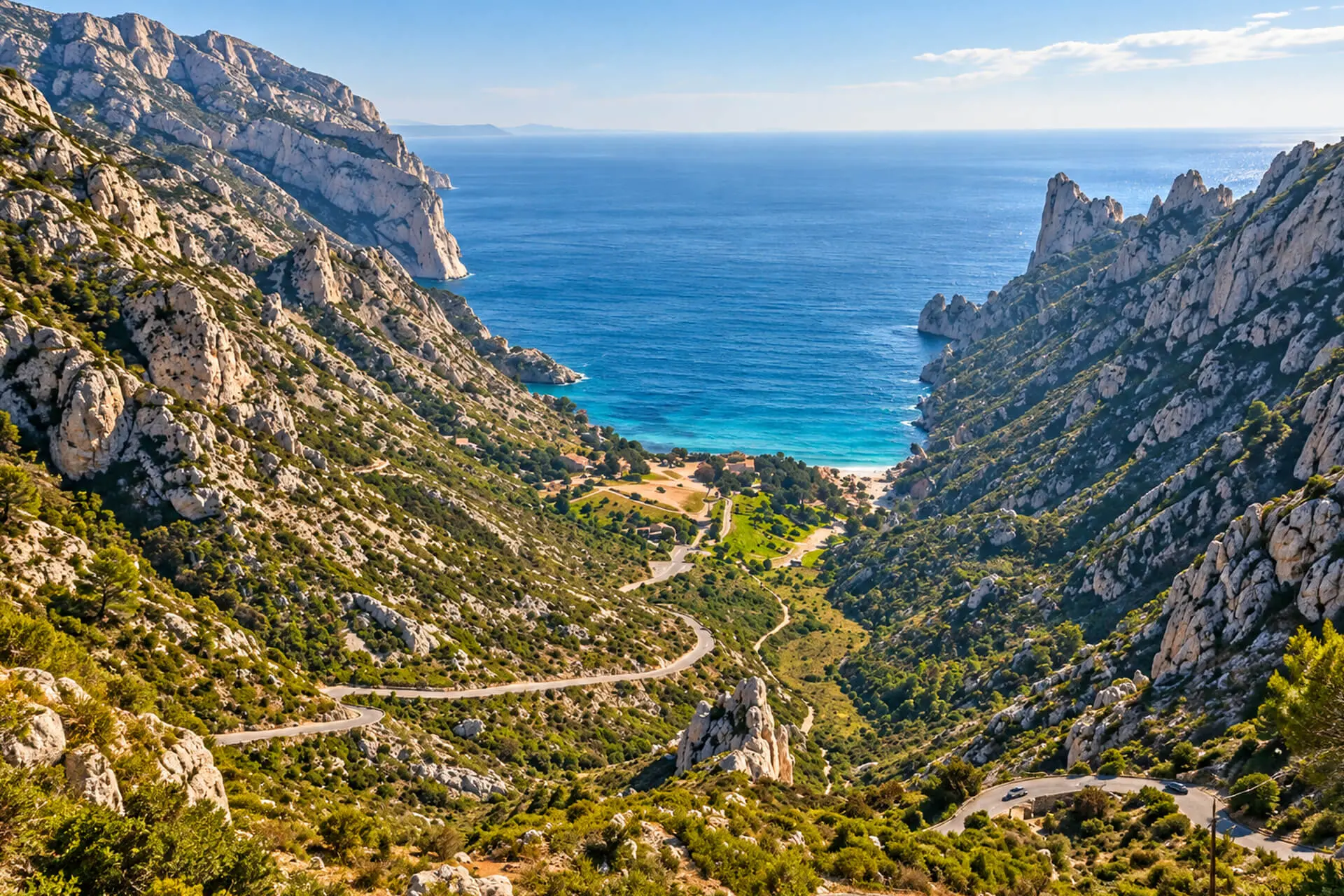
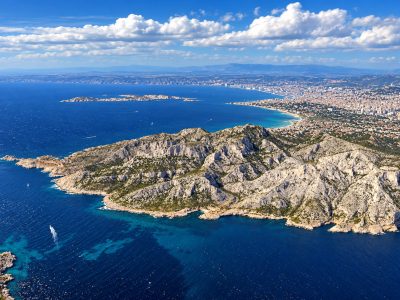
At the end of a narrow road that starts from Les Baumettes and La Cayolle, in the 9th arrondissement, Sormiou is the widest of Marseille’s calanques and one of the few with a real beach. A hamlet of cabanons, a small harbour, a restaurant, a beach with lifeguards in summer: it is the calanque of Marseille families, provided you accept a walk of at least three quarters of an hour in season, when the road is closed to cars.
Why go to Sormiou
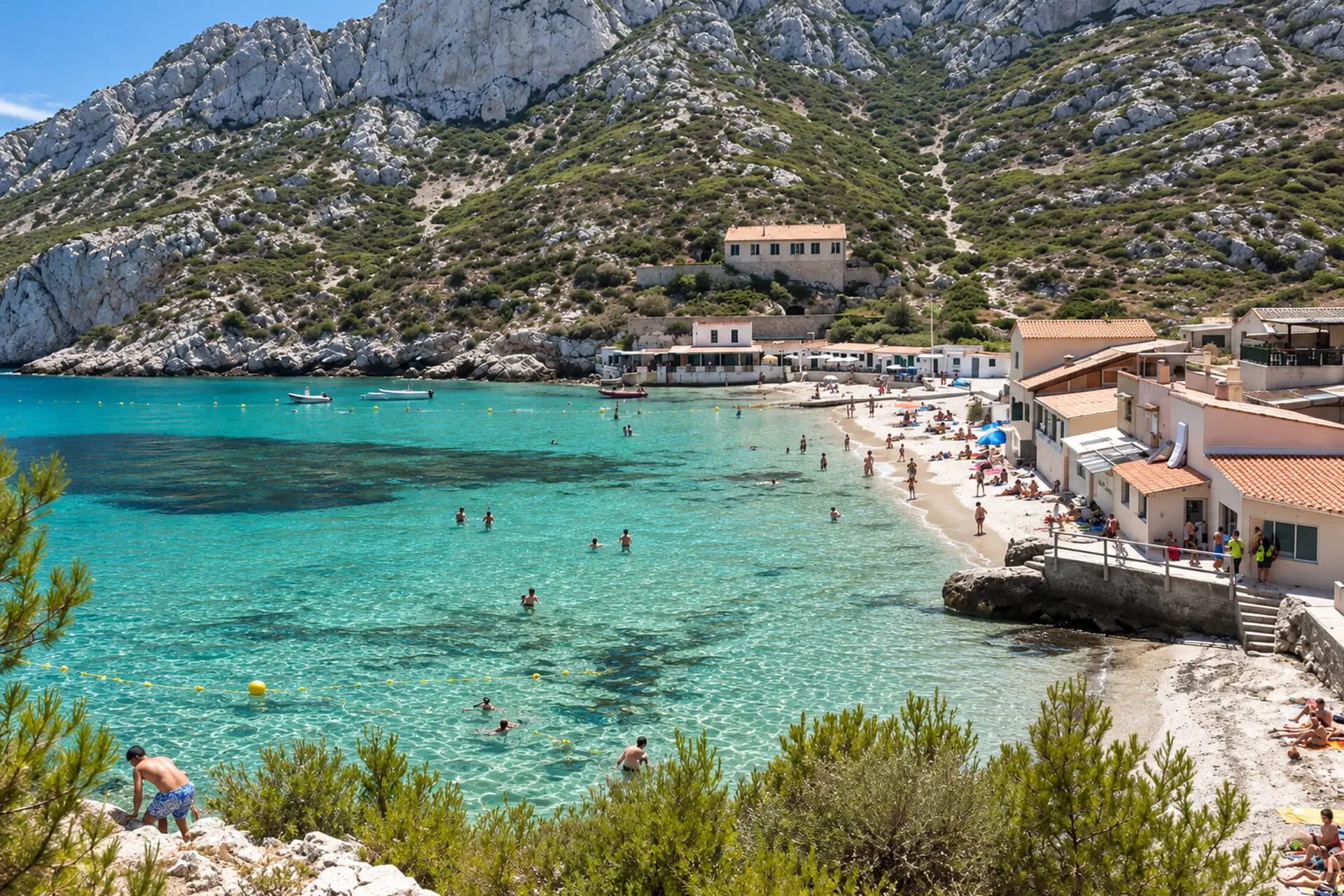
- A beach some sixty metres long, sand and pebbles, the only one in Marseille’s calanques with lifeguards, along with Saint-Estève on the Frioul.
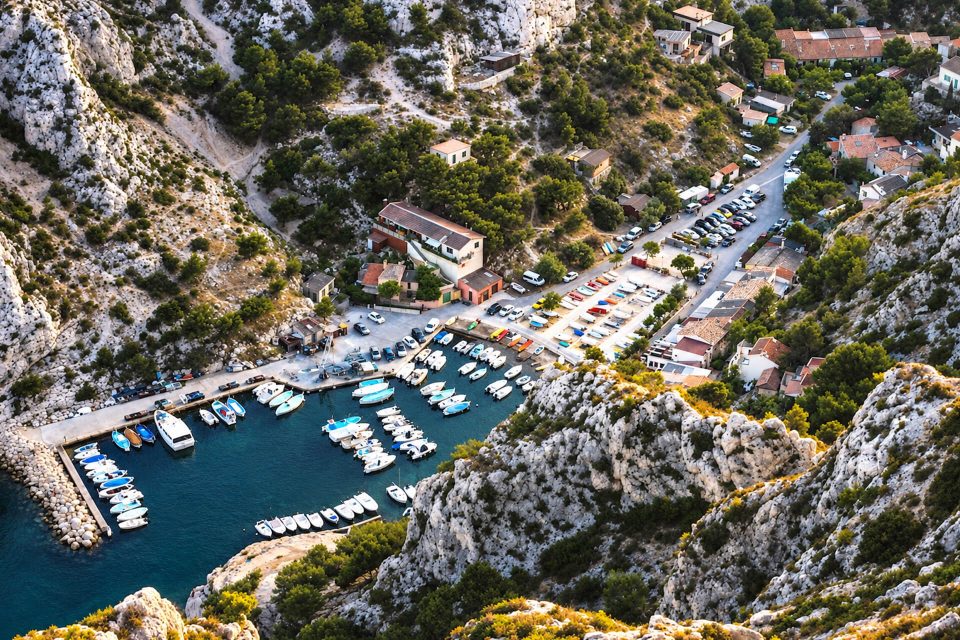
- An inhabited hamlet: around a hundred cabanons, with no running water or mains electricity, around a small harbour of boats.
- Two waymarked paths from the bus stops, via the Col de Sormiou or the Col des Baumettes, with a view straight down onto the bay.
- A history of fishermen, customs officers, a poet countess and the beginnings of scuba diving.
The calanque and its beach
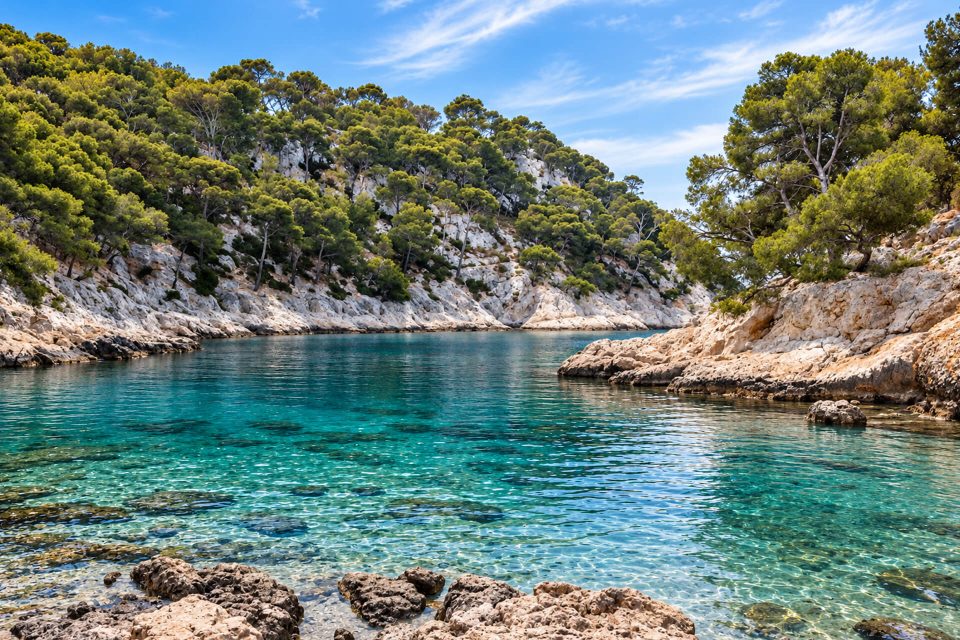
Sormiou opens wide to the south-east, between the Crête de Sormiou and the Crête de Morgiou. At the far end, the beach mixes sand and pebbles; at one end is the UCPA centre (kayaking, hiking, climbing), at the other the small marina. The water is often cooler than in town: an underground water table flows beneath the calanque, which incidentally owes its name, in Provençal, to the ‘best spring’.
The beach has lifeguards during the City of Marseille’s bathing season: in 2026, from 29 May to 30 August, from 11:00 to 18:30, with a first-aid post. The toilets there are charged for, as at Borély and Saint-Estève. The City monitors the bathing water quality. The rest of the year, you swim there without lifeguards.
For food, the restaurant du Château occupies the former summer residence of the Countess of Sormiou. The Tourist Office lists it as open from April to October, by telephone booking and with no card payment, but also reports a closure in high summer, replaced by a takeaway refreshment stall open from 10:00 to 18:00. Check before counting on it.
Getting there
By bus, the best option. Two RTM lines leave from Rond-Point du Prado metro station (line 2):
- Line 23, towards Beauvallon, La Cayolle stop. You climb by the road or the brown-waymarked path to the Col de Sormiou, then head down to the sea: 2.8 km, about 1 hr each way, 100 m of ascent, moderate level according to the National Park.
- Line 22, towards Les Baumettes, to the terminus. You cross the Parc des Baumettes to take the red-waymarked path via the Col des Baumettes: 2.1 km, about 45 min, 80 m of ascent, moderate level.
Both paths are very exposed to the sun and the climb back is gruelling for families and for people who are not very fit: allow at least 2 litres of water per person. Forget pushchairs and bikes.
By car. The City of Marseille closes the Sormiou road to motor vehicles from 7:00 to 19:00 during the fine-weather season. In 2026: many days from April to early June (Fridays, weekends, public holidays and long weekends), every day from 12 June to 30 August, then Saturdays and Sundays in September. Only emergency services and authorised users (residents of the cabanons, holders of a berth in the harbour) can then get through. The 2023 order, the latest text we have been able to read, also granted exceptional access to restaurant customers with a booking, subject to spaces, and allowed drop-off by taxi. Parking is prohibited along the road. Outside these periods, you can drive down to the paying car park at the bottom of the calanque. The road is narrow and winding, and passing other vehicles is tricky.
By sea. Cruises leave from the Vieux-Port and La Pointe-Rouge, but they do not drop passengers off at Sormiou.
Good to know
- Fire risk: from 1st June to 30 September, access to the massifs is regulated by the prefecture. The map for the following day is published every evening at around 18:00 (Mes Calanques app, prefecture website). On a red day, you cannot enter the Park on foot; the 2023 order then only let authorised users through on the road.
- Dogs: the Tourist Office listing states that animals are not allowed on the beach; in the Park, they must be kept on a lead.
- Crowds: the calanque is packed at summer weekends. Come early in the morning or late in the afternoon.
- Park rules: no fires and no smoking, no rubbish left behind, stay on the waymarked paths. In an emergency, dial 112.
A little history
Inhabited since prehistoric times, the site was home at the end of the 19th century to some fifty people, mostly fishermen from Mazargues. In 1876, the calanque was bought at auction and given as a dowry to Marie Buret, the future Countess de Ferry, who would sign her poems ‘Marie de Sormiou’. In 1894 the couple had a summer residence built there, immediately nicknamed ‘le Château’, along with 17 cabanons let at low rents. The longest cabanon housed the customs officers in charge of watching for smugglers. The road was only surfaced in the 1950s-1960s: before that, donkeys brought in supplies and carried the fish down to the city.
Sormiou also has a place in the history of diving: as early as 1942, Georges Beuchat, Albert Falco and Jacques-Yves Cousteau made scuba dives here. The seabed, with its Posidonia seagrass meadow, remains among the richest on the coast. Film crews have often set up here, from André Téchiné’s Les Témoins to La French.
Around Sormiou
The GR 98, which links Callelongue to Cassis, crosses the calanque. To the east, it reaches the Calanque de Morgiou, narrower and inhabited all year round. Between the two, below Cap Morgiou, the Calanque de la Triperie holds the underwater entrance to the Cosquer cave, decorated several tens of thousands of years ago and closed to the public: a partial replica can be visited at the Villa Méditerranée, near the Mucem. Offshore, the islands of Riou, Plane and Jaïre stand out. Climbers will find many routes towards the Bec de Sormiou and on the Morgiou side.
Sources : Calanques National Park - City of Marseille, order on traffic on the chemin de Sormiou (2023) - RTM, maps of lines 22 and 23 - Marseille Tourist Office - Wikipedia, Calanque de Sormiou
Nearby
 Calanque de Morgiou≈ 35 min on foot
 Calanque de Sugiton≈ 50 min on foot
 Calanque de Podestat≈ 50 min on foot
Times calculated from each guide’s coordinates.
Frequently asked questions
Can I drive to Sormiou?
Not during the closure periods: from 7:00 to 19:00, the road is reserved for emergency services and authorised users (in 2026, every day from 12 June to 30 August, many days from April to June and weekends in September). Outside these periods, there is a paying car park at the bottom.
Which bus goes to the Calanque de Sormiou?
The 23 (towards Beauvallon, La Cayolle stop) or the 22 (towards Les Baumettes, terminus), both leaving from Rond-Point du Prado metro station. Then allow 45 min to 1 hr on foot.
Does Sormiou beach have lifeguards?
Yes, during the City of Marseille’s bathing season, from 11:00 to 18:30 (in 2026: from 29 May to 30 August), with a first-aid post.
Are dogs allowed at Sormiou?
Not on the beach according to the Tourist Office. On the National Park’s paths, they must be kept on a lead.
Do I need to book to go to Sormiou?
No, access on foot is free. Only the Calanque de Sugiton requires a booking in summer. Do, however, check the massif access map between June and September.