Calanque de Callelongue
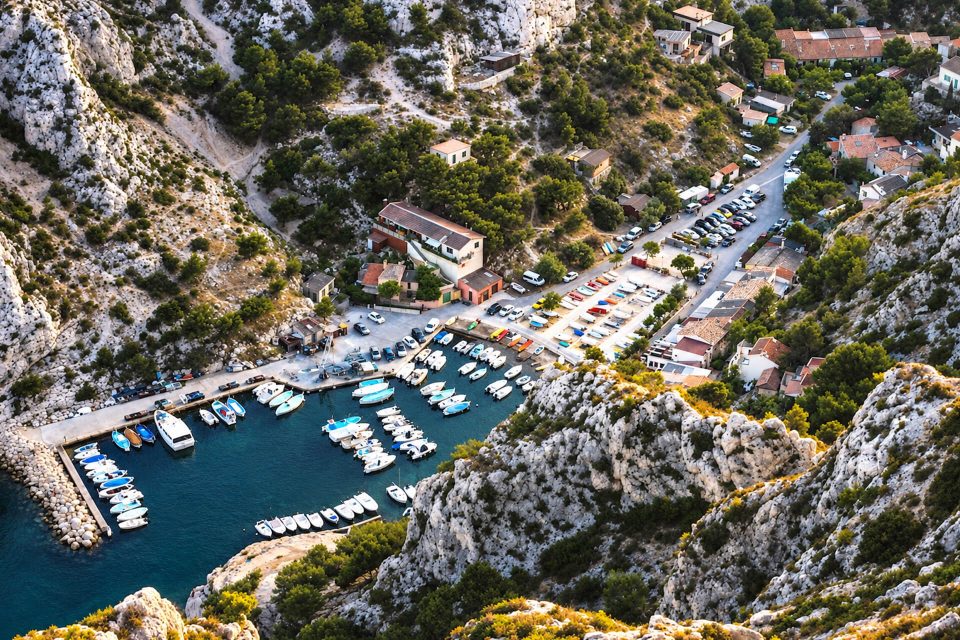
Hamlet of cabanons and small harbour at the end of the Les Goudes road, terminus of bus 20 and start of the Marseilleveyre trails.
Contents · 9 sections
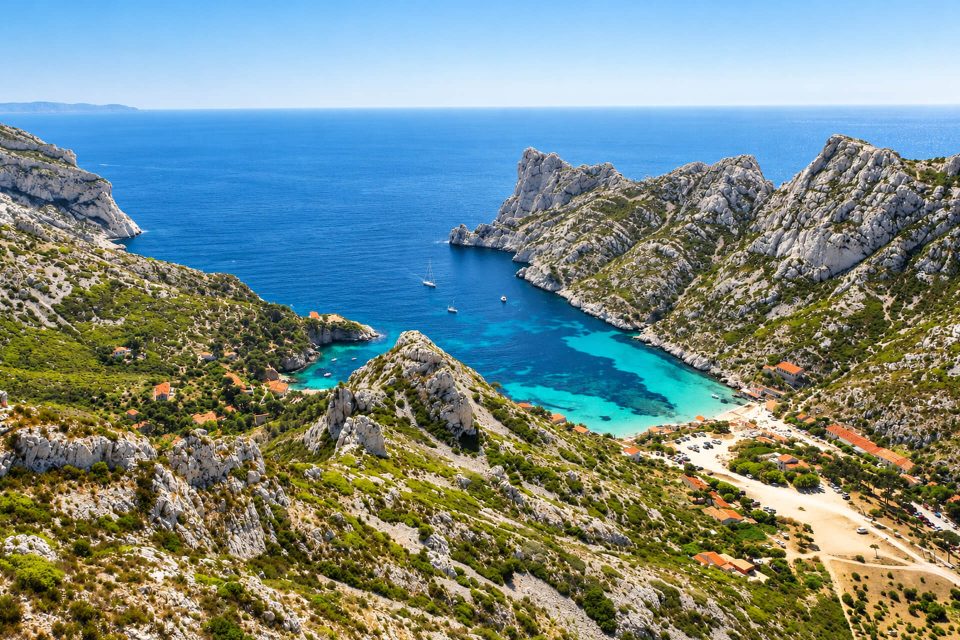
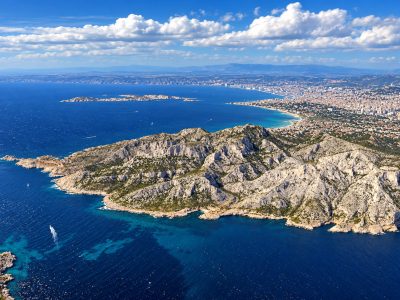
At the end of the southern coast road, where the tarmac stops dead against the Marseilleveyre massif, Callelongue is at once a hamlet, a small fishing harbour and the first calanque heading out from Marseille. It lies in the 8th arrondissement, just past the village of Les Goudes. People come less for swimming, as there is no beach, than for what it opens up: it is the starting point of the trails to Marseilleveyre and the neighbouring calanques, and the terminus of bus 20.
Why go
- The start of the hikes in the Marseilleveyre massif: the GR 98, which here follows the same route as the GR 51, passes through the hamlet before heading off towards Cassis.
- A hamlet of cabanons huddled around a tiny harbour, where the boats are pulled up onto the rocks.
- The semaphore, about ten minutes away on foot, with the view of the Riou archipelago.
- Bus access right to the end of the road, which is rare in the calanques.
- A place open all year, hamlet included; only the trails may close in summer when there is a fire risk.
The calanque and the hamlet
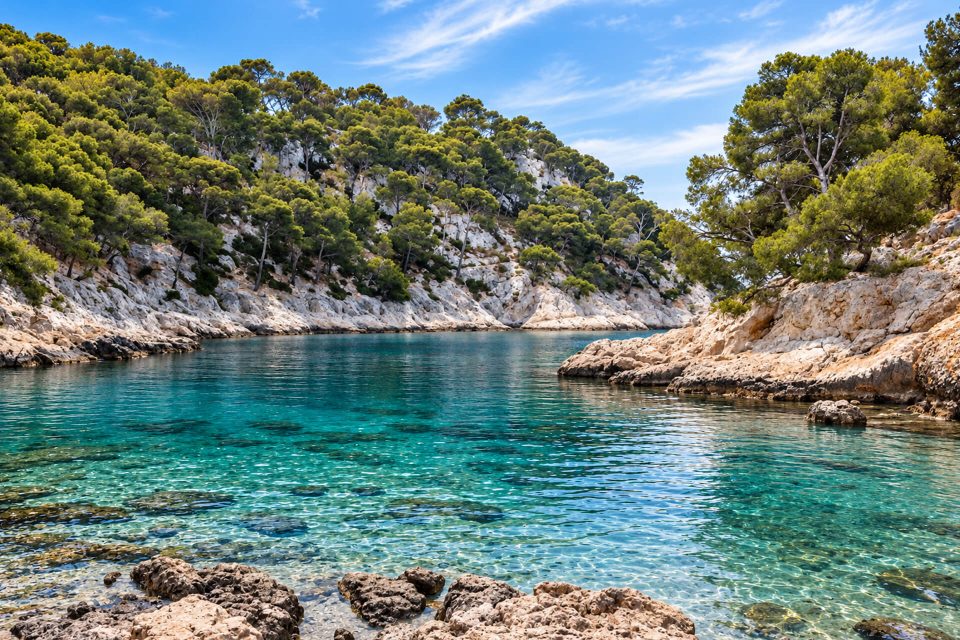
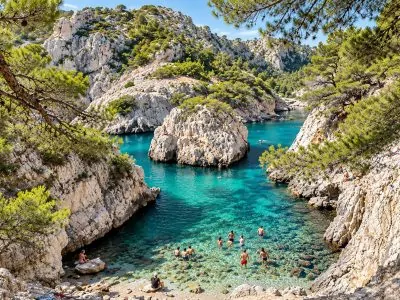
Callelongue owes its name to its shape: a narrow, elongated cove, from the Provençal calo (small rocky creek). There is no sandy beach: you swim from the rocks, with just a thin strip of sand along the shore. No first-aid post is reported by the sources consulted.
Along the avenue des Pébrons, the hamlet’s only street, fishermen’s cabanons stand in a row. Some owners have laid out an exotic garden on the terraces of the hillside; the National Park keeps a close eye on some of these plants, which are becoming invasive. At the back of the harbour, the restaurant La Grotte, known for its pizzas and fish, is listed as open all year, lunchtime and evening, by its Tourist Office listing updated in December 2025; its opening hours are not guaranteed, so it is best to call ahead.
A little history
- Inhabited caves: the hollows in the nearby cliffs (the Ours, Ermite and Saint-Michel caves) bear traces of prehistoric occupation. In the Middle Ages, hermits dug out a chapel there dedicated to Saint Michel d’Eau Douce, now gone.
- 1849-1884: a chemical works, the Weiss factory, transformed the harbour. Some of its buildings were later converted into shops and housing.
- 1864: a semaphore replaced the old lookout post. Restored with the help of local residents and the National Park, it now serves as a viewpoint and a place to discover the environment.
- 1967: the téléscaphe was installed, an underwater cable car that went down to about ten metres between Les Goudes and Callelongue. Remains of it survive, including the wheels that drove the cabins.
- On film: the calanque appears in Marcel Pagnol’s César (1936) and, much later, in Pierre Salvadori’s En liberté ! (2018).
Getting there
By bus: take line 19 (from Castellane or Rond-point du Prado, metro line 2) to its terminus, Madrague de Montredon, then line 20 to the Callelongue terminus. Buses on the 20 are infrequent: check the RTM timetables before setting off, especially for the return trip.
By boat: in season, the RTM shuttle boat links the Vieux-Port with Les Goudes via La Pointe-Rouge. From Les Goudes, allow about a quarter of an hour on foot to Callelongue, or take bus 20 again.
By car: the coast road is often jammed at weekends and in summer, sometimes from La Pointe-Rouge onwards, and spaces are scarce at the end of the road. In summer, the City closes the Callelongue road to motor vehicles during the day to let emergency services through: in 2026, from 7:00 to 19:00, from 5 to 7 June and then every day from 12 June to 30 August. The dates change every year; check them on the National Park website before taking the car.
Trails from Callelongue
- To the Calanque de Marseilleveyre: the waymarked coastal path of the GR 98-51, about 45 minutes to an hour depending on the source, passing above the Calanque de la Mounine. The Calanque des Queyrons and then the Calanque de Podestat follow, further on.
- The semaphore: about ten minutes from the end of the road.
- The Pas de la Demi-Lune: a steep climb to a gap in the cliff, with the view over the harbour of Marseille. The way through to the southern side is for experienced walkers with a head for heights.
- The Sentier du Président, named after a former president of the Excursionnistes marseillais: about two hours to the harbour of La Madrague de Montredon, with several viewpoints.
The ground is steep and the limestone, polished by the passing feet, is slippery: proper walking shoes are essential. Once you leave the hamlet, there is no water point on the trails; take at least one litre per person, two for a long walk or in hot weather.
Good to know
- Access to the massifs in summer: from 1st June to 30 September, the prefecture sets access to the massifs each day according to the fire risk. The map for the following day is published at around 18:00; a massif shown in red is off limits, hikers included. The hamlet remains accessible, but not the trails.
- Park rules: in the core of the National Park, it is forbidden to light fires (barbecues included), to smoke, to bivouac and to leave the waymarked paths. Dogs must be kept on a lead.
- At sea: speed limited to 5 knots within the 300-metre coastal strip, no mooring to the yellow buoys and no anchoring in the marked zones.
- Crowds: at weekends and in summer, the road and the bus are busy; come early or on a weekday.
- Rubbish: the residents of Les Goudes and Callelongue ask visitors to take their rubbish home; leave nothing on the rocks.
Around Callelongue
Just before it, the village of Les Goudes, its harbour and Maronaise Beach; a little further on, Cap Croisette and the Baie des Singes, facing the island of Maïre. To the east, the trail leads to the Calanque de la Mounine, the Calanque de Marseilleveyre and, for strong walkers, the Calanque des Queyrons and the Calanque de Podestat.
Sources : Calanques National Park - Marseille Tourist Office - Bouches-du-Rhône Prefecture, access to the massifs - Wikipedia, Calanque de Callelongue - Wikipedia, Massif de Marseilleveyre - OpenStreetMap
Nearby
 Calanque de la Mounine≈ 15 min on foot
 Les Goudes Beach≈ 15 min on foot
 Maronaise Beach≈ 15 min on foot
Times calculated from each guide’s coordinates.
Frequently asked questions
How do I get to Callelongue by bus?
Take bus 19 to the Madrague de Montredon terminus, then bus 20 to the Callelongue terminus. Buses on the 20 are infrequent: check the RTM timetables.
Can I drive to Callelongue?
Yes out of season, but spaces are scarce. In summer, the road is closed to motor vehicles during the day (in 2026: from 7:00 to 19:00 from 12 June to 30 August, and from 5 to 7 June).
Is there a beach at Callelongue?
No, there is no sandy beach: you swim from the rocks. No first-aid post is reported.
How long does it take to walk from Callelongue to the Calanque de Marseilleveyre?
About 45 minutes to an hour on the waymarked coastal path (GR 98-51), with good shoes.
Are dogs allowed?
Yes, on a lead: this is compulsory in the core of the National Park.
Are the trails open in summer?
From 1 June to 30 September, access depends each day on the fire risk. Check the prefecture’s map, published at around 18:00 for the following day.