Les Goudes Beach
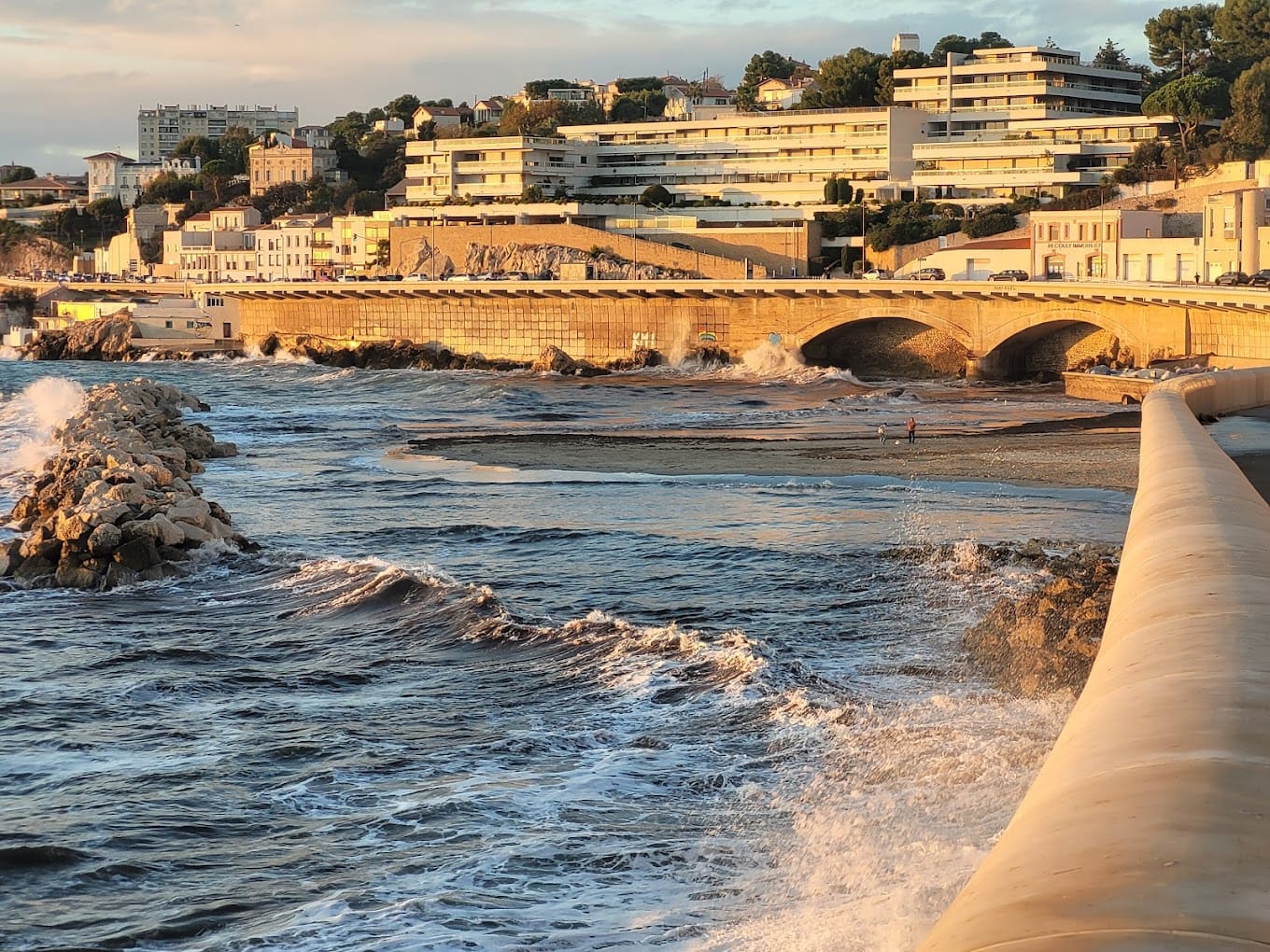
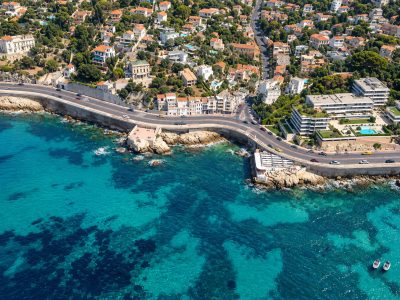
Small sandy cove by the harbour of Les Goudes, a former fishing village at the end of Marseille’s southern coast.
Contents · 8 sections
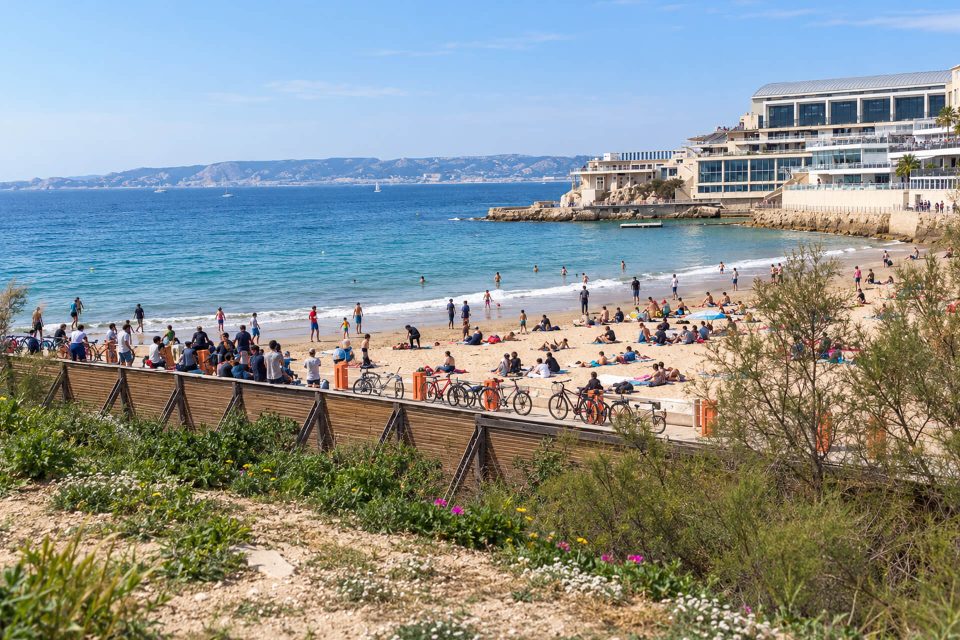
At the end of the southern coast road, in the 8th arrondissement, the village of Les Goudes backs onto the Marseilleveyre massif, facing the island of Maïre. Its beach is a small cove of sand and gravel right next to the harbour, at the entrance to the village. It is nothing like the Prado beaches: it is a scrap of shoreline among the boats and cabanons, reached by bus or, in summer, by shuttle boat. For anyone who wants a swim at Marseille’s ‘end of the world’, followed by lunch on the harbour.
Why go to Les Goudes
- A former fishing village, on the southern edge of Marseille and of the Calanques National Park.
- Two small beaches: the harbour beach and, a few minutes’ walk away, the Anse de la Maronaise.
- Arrival by sea possible in summer, with the shuttle boat from La Pointe-Rouge.
- The starting point for walks to Callelongue, Cap Croisette and the Baie des Singes.
- The fish restaurants on the harbour, which the Tourist Office recommends trying out of season.
The beach
The Tourist Office describes a small cove of sand and gravel, next to the harbour, with restaurants close by. Its page on the village is more guarded: it considers that there is ‘no beach as such’ and that the boldest swim in the outer harbour. So expect a small patch of sand, reached by steps according to a beach guide, rather than a big beach.
No lifeguards: the National Park states that the two small beaches of Les Goudes, the harbour beach and La Maronaise, have no lifeguards and are very busy in summer. It points out that the currents are unpredictable along this coast, from Mont Rose to Cap Croisette, and that swimming from the rocks should only be done in calm seas, with great care.
A factory village turned fishing village
The creek first served as a shelter for fishermen caught out by bad weather. In the 19th century it became industrialised: a soda factory set up at the head of the cove in 1804, a lead works opened in 1854 with eighteen workers, and soda, lead and sulphur works followed one another until around 1860. The lead crisis put an end to the Les Goudes works, demolished in 1879. The stones of its walls were then used to build cabanons, and the hamlet became a fishing village.
At the end of the 19th century, the tramway was extended to La Madrague de Montredon, a terminus fixed in 1891, bringing Les Goudes closer to the centre: the people of Marseille came here for Sunday picnics. The fishing harbour has since become a marina, but a few skipper-fishermen still go out. The small fort overlooking the village dates from the Napoleonic era; the blockhouse south of the harbour was part of the German Mediterranean Wall. In 2022, the district had 592 inhabitants.
The origin of the name is still debated: Frédéric Mistral linked it to the Provençal godo, from the Latin coda, the tail, hence the idea of the end of the world; the National Park also suggests a spring (gour) or the ‘bends’ (coudes) in the road. The expression ‘va te jeter aux Goudes’ (‘go and throw yourself in at Les Goudes’), which the people of Marseille use to send someone packing, is said to come from this isolation at the end of a dead-end road; the Tourist Office also cites other theories, linked to the shipwrecks off nearby Cap Croisette.
Getting there
- By bus: metro line 2 to Rond-Point du Prado (or start from Castellane), bus 19 to the Madrague de Montredon terminus, then bus 20 (towards Callelongue), Les Goudes Giraud or Les Goudes stop, six minutes further on. According to the timetables published by RTM for November-December 2026, the 20 leaves every 30 minutes on weekdays, from 6:30 to 19:30 from La Madrague, and every 20 minutes in the afternoon at weekends. The service is increased in summer and has run until 23:00 in recent seasons.
- By sea: in 2026, the Pointe-Rouge – Les Goudes shuttle boat ran every day from 30 May to 30 August, with one departure an hour (a crossing of about 15 minutes). The trip cost €5, or €8 from the Vieux-Port with a change at La Pointe-Rouge; tickets on board only, and the trip is included in RTM 7-day, 30-day, annual and permanent passes.
- By car: a single road, very congested in summer. Parking is only allowed in marked spaces; parking at the roadside means a €135 fine and the pound. Two park-and-ride car parks near Rond-Point du Prado are free for RTM pass holders.
- By bike: LeVélo stations at Les Goudes, l’Escalette and Callelongue; the speed limit is 30 km/h along the coast.
Good to know
- Works until March 2027: the second phase of the clean-up of the slag, residues of the old lead works, covers l’Escalette, Les Goudes and Callelongue. Alternating one-way traffic and reduced parking: come by bus.
- In summer, from 1st June to 30 September, access to the hills around the village depends each day on the fire risk. The map is published the day before at around 18:00; the Mes Calanques app reports closures.
- Military remains: the Park asks people not to go into buildings that have not been made safe.
- Respect the site: stay on the paths, which protect fragile vegetation, and take your rubbish home.
- Out of season, the village regains its calm from autumn to early spring.
Around Les Goudes
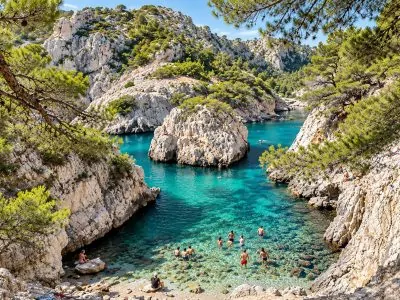
A few minutes’ walk towards Cap Croisette, the Anse de la Maronaise offers a second small beach, followed by the Baie des Singes, facing the island of Maïre. To the east, an easy 2.7-kilometre walk, about two hours, links Les Goudes to the Calanque de Callelongue, terminus of bus 20 and starting point for the Marseilleveyre trails. Heading back towards the city, the Calanque Blanche, the harbour of l’Escalette and the Calanque de Saména line the road.
Sources : Marseille Tourist Office - Calanques National Park - RTM, timetables published as open data (Aix-Marseille-Provence Metropolis) - Wikipedia, Les Goudes - Provence-Alpes-Côte d’Azur Tourism - OpenStreetMap - Made in Marseille - Bord-de-mer.com, beach guide
Nearby

Times calculated from each guide’s coordinates.
Frequently asked questions
How do I get to Les Goudes by bus?
Bus 19 to the Madrague de Montredon terminus, then bus 20 towards Callelongue to the Les Goudes Giraud or Les Goudes stop, about six minutes further on.
Is there a shuttle boat to Les Goudes?
Yes, in summer. In 2026, it linked La Pointe-Rouge with Les Goudes every day from 30 May to 30 August, one departure an hour, for €5 (€8 from the Vieux-Port).
Does Les Goudes beach have lifeguards?
No. The National Park states that the two small beaches of Les Goudes, the harbour beach and La Maronaise, have no lifeguards.
Can I park at Les Goudes?
Only in the marked spaces, of which there are very few. Parking at the roadside is fined (€135) and can end in the pound; take the bus instead.
Are there works at Les Goudes?
Yes: until March 2027, the clean-up of the old lead deposits covers l’Escalette, Les Goudes and Callelongue, with disrupted traffic.
Where does the expression ‘va te jeter aux Goudes’ come from?
It is said to come from the village’s isolation at the end of a dead-end road: a Marseille way of sending someone to the end of the world. There are other theories.