
Contents · 7 sections
A hilltop village between Forcalquier and Manosque
Dauphin is a commune in the Alpes-de-Haute-Provence with 838 inhabitants (2023 municipal population, INSEE), located between Forcalquier and Manosque. The village rises on a hill above the plains of the Largue and the Laye, facing the Luberon. It holds the Village de caractère des Alpes-de-Haute-Provence label, and the commune has signed the charter of the Luberon Regional Natural Park. Its neighbouring communes are Mane, Saint-Maime, Volx, Manosque, Saint-Martin-les-Eaux and Saint-Michel-l’Observatoire.
Getting there
From Forcalquier, take the D 13 to Mane, then the D 5. From Manosque, head for Saint-Maime, then take the D 5. The A51 motorway has an exit at Manosque. The nearest railway station is Manosque-Gréoux-les-Bains, about fifteen kilometres away and served by TER regional trains; coaches of the regional Zou network also run in the area.
History: from the county of Forcalquier to the ramparts
The settlement appears in the records in 1125 as castrum de Delfino, and a castle mound already stood there in the previous century. In Roman times the Via Domitia, known locally as the chemin Seinet, crossed the plain, and nearby farms have yielded mosaics, inscriptions and pottery. In the 12th century the fief belonged to the county of Forcalquier. In 1220 the agreement of Meyrargues gave the southern half of the county, including Dauphin, to the Count of Provence, Raimond Bérenger IV. In the 14th century the houses gathered on the fortified hill, and a new wall was built after 1419. During the Revolution the commune was renamed Mont-Libre.
The keep, the ramparts and the lanes
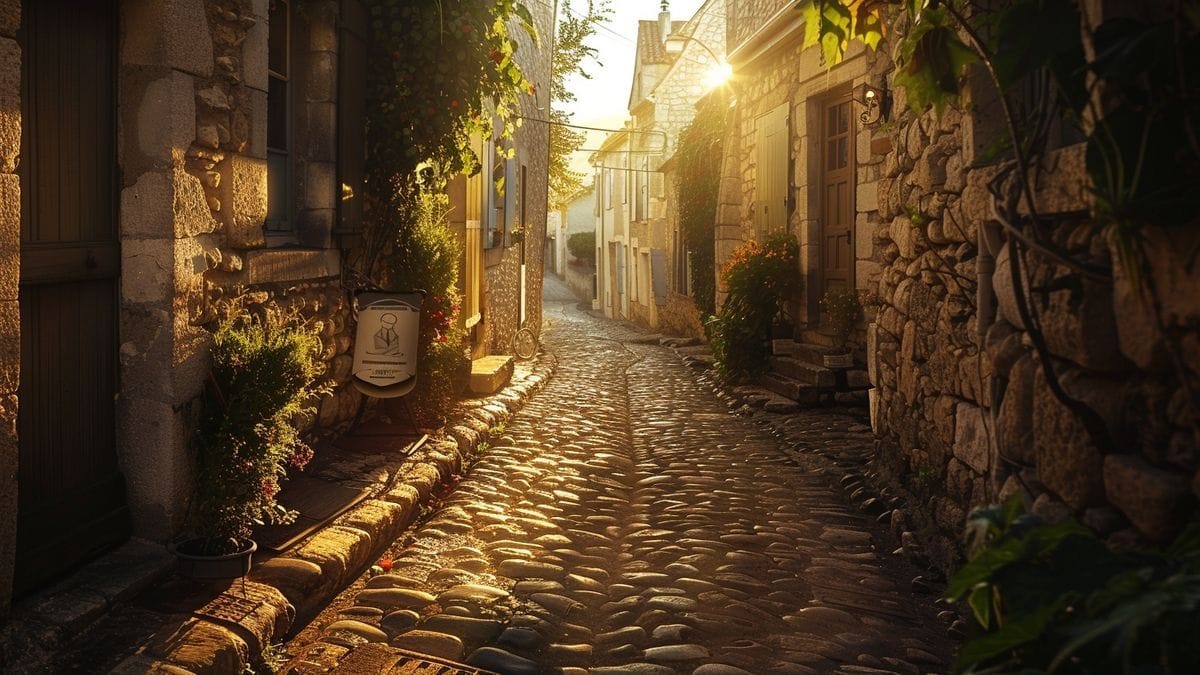
Of the counts’ castle, the keep survives, crowned with an 18th-century balustrade and a statue of the Virgin. The ramparts are still largely intact: some towers are built into houses, and the old town is entered through gateways, among them the Portail de la Vierge. Cobbled lanes and covered passages, such as the passage du Coulard, lead to 16th- and 17th-century façades with mullioned windows, carved door frames and corner niches. The wash house, built in 1905, has a viewing terrace. From the top of the village, the view takes in the Luberon to the south and, to the north, Saint-Maime, the Saint-Michel observatory, Mane, the citadel of Forcalquier and the ridges of Lure.
The church of Saint-Martin and its nativity scene
The church of Saint-Martin is the former castle chapel, which became the parish church in 1524. Its Gothic choir dates from the early 16th century, and its bell tower is roofed with green glazed tiles. It houses a Baroque organ, around which concerts are held in summer. At Christmas, a nativity scene with 18th-century santons is displayed there, one of the oldest in the Forcalquier area. The commune also has the chapel of Notre-Dame d’Hubages, a place of pilgrimage built in the 17th century, and, nearby, the fortified farm of les Encontres, which dates from the 15th and 16th centuries.
Tips for your visit
Half a day is enough to wander the lanes, walk up to the foot of the keep and visit the church. Summer brings guided tours, organ concerts and open craft workshops, with potters, ceramicists, ironworkers and wood turners. December is the season of the nativity scene. In spring and autumn, the light is softer for photographs of the Luberon. Dauphin is easy to combine with Forcalquier, its Monday market and its citadel, with Mane and Saint-Michel-l’Observatoire, or with Manosque. The lavender fields of the Valensole plateau lie about thirty kilometres away and are best seen in early summer.
Sources : Wikipédia - INSEE - Tourisme Alpes-de-Haute-Provence - Comité régional du tourisme Provence-Alpes-Côte d'Azur - Luberon.fr
Frequently asked questions
Where is Dauphin?
In the Alpes-de-Haute-Provence, between Forcalquier and Manosque, on a hill overlooking the plains of the Largue and the Laye, facing the Luberon.
What is there to see in Dauphin?
The castle keep topped with a statue of the Virgin, the ramparts and their gateways, the lanes and covered passages, and the church of Saint-Martin with its Baroque organ.
When can you see the Dauphin nativity scene?
At Christmas, in the church of Saint-Martin: its santons date from the 18th century, making it one of the oldest in the Forcalquier area.