Contents · 7 sections
Location and access
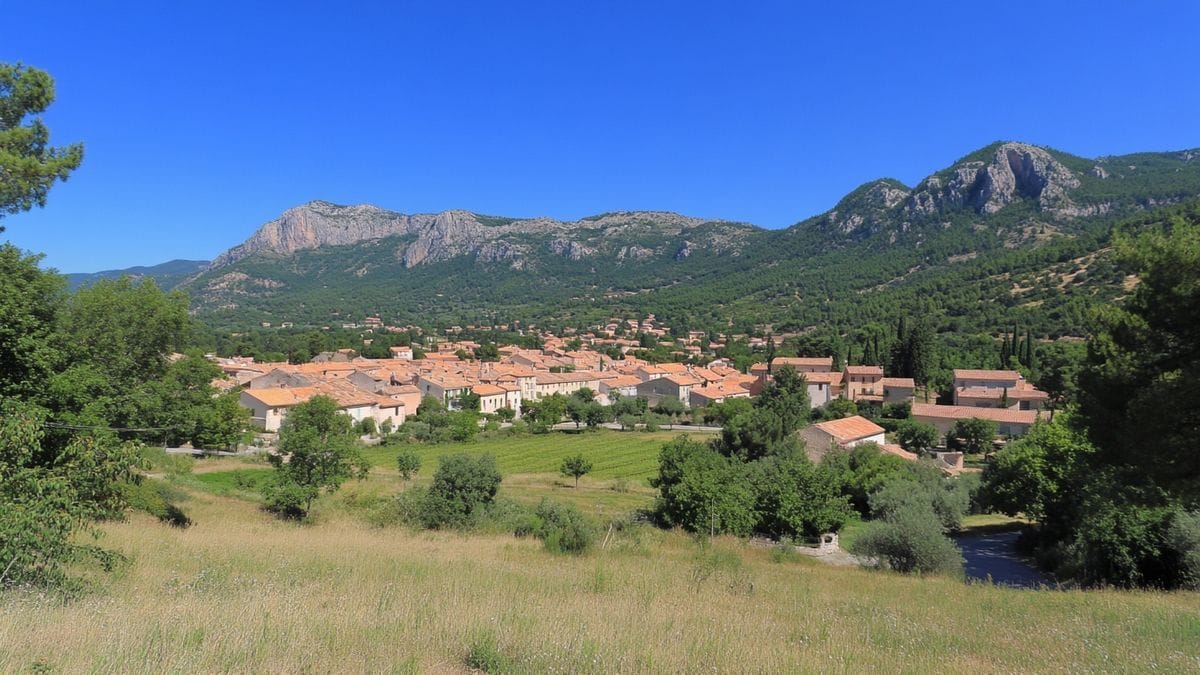
Le Caire is a small commune in the Alpes-de-Haute-Provence department, in the area known as the Hautes Terres de Provence, north-east of Sisteron. Its name, recorded in the Middle Ages and of disputed origin, has nothing to do with the Egyptian capital. The village lies in the valley of the Grand Vallon, and the commune borders La Motte-du-Caire, Faucon-du-Caire, Clamensane, Bayons and Curbans. From Sisteron, you get there on the D951. According to the latest official population figures published by INSEE, Le Caire has 80 inhabitants, spread between the village and widely scattered houses. The commune belongs to the Sisteronais-Buëch community of communes.
History and heritage
The ruins of a feudal tower rise above the houses. The church of Saint-Michel-Archange dates from the 17th century, with a rib-vaulted nave, a flat-ended choir and a modest bell tower. Set high above the village, it looks out over roofs of Roman tiles and the folded grey hills around it.
The most unusual heritage here is industrial. The former Rolland factory produced plaster and lime. Its remains, partly listed as a historic monument since 1996, still hold kilns, grinding machines and a mechanism driven by animal power. The site is private property, so it is seen from its surroundings, without entering the ruins.
The village and its landscapes
The centre comes down to a square with its fountain and plane tree, a few quiet lanes, restored old houses and weathered barns of pink stone. Around it, orchards and sheep pastures fill the lower ground, while woods cover much of the slopes. Above them, the tall limestone face of the Grande Fistoire dominates the scene.
The Grande Fistoire via ferrata
The commune is best known for the via ferrata de la Grande Fistoire, built in 1996 on a limestone face about a kilometre beyond the village. Rated difficult, it features a suspended footbridge, a Nepalese bridge and three zip lines, with escape routes to shorten the outing. Allow about three hours on the route, often more, plus the approach walk and the return. The reception office, on the route de Turriers, rents out equipment (helmet, harness, lanyards) and takes bookings. Climbing instructors also run guided outings for beginners.
Hiking and cycling
The Montée de Piéfourcha, a demanding loop that starts from the via ferrata office, climbs to the ridges overlooking the Grand Vallon; near the top of the via ferrata, sighting tubes help pick out the upper valley. The pastures are often guarded by livestock guardian dogs, so give the flocks a wide berth. By bike, the Balade des vergers starts from Le Caire, and the Tour du Grand Vallon mountain-bike route explores the lower valley from La Motte-du-Caire.
Visiting tips
The via ferrata office is open every day from April to October and switches to reduced hours in winter; check the weather and book before you come. In summer it is best to set off early to avoid the hottest hours, on the rock face as on the ridges. The village has very few services, so bring water and a picnic. Accommodation on site is mostly holiday rentals. A day is enough to combine the via ferrata or a hike with a stop in La Motte-du-Caire, before heading back down to Sisteron and its citadel.
Sources : Wikipédia - INSEE - Bureau d'accueil des via ferrata du Caire - Provence-Alpes-Côte d'Azur Tourisme - Office de tourisme Sisteron Buëch - Viaferrata.org - Randozone - Provenceweb - Monumentum
Frequently asked questions
Where is Le Caire?
In the Alpes-de-Haute-Provence, north-east of Sisteron, in the valley of the Grand Vallon. It is reached on the D951.
Is the Grande Fistoire via ferrata difficult?
Yes, it is rated difficult and includes a footbridge, a Nepalese bridge and three zip lines. Allow about three hours on the route.
Do I need to book the via ferrata?
Yes, bookings are made with the reception office on the route de Turriers, which also rents out equipment.